Faith and inspiration
The Rosary
TAJI · 22 August 2026
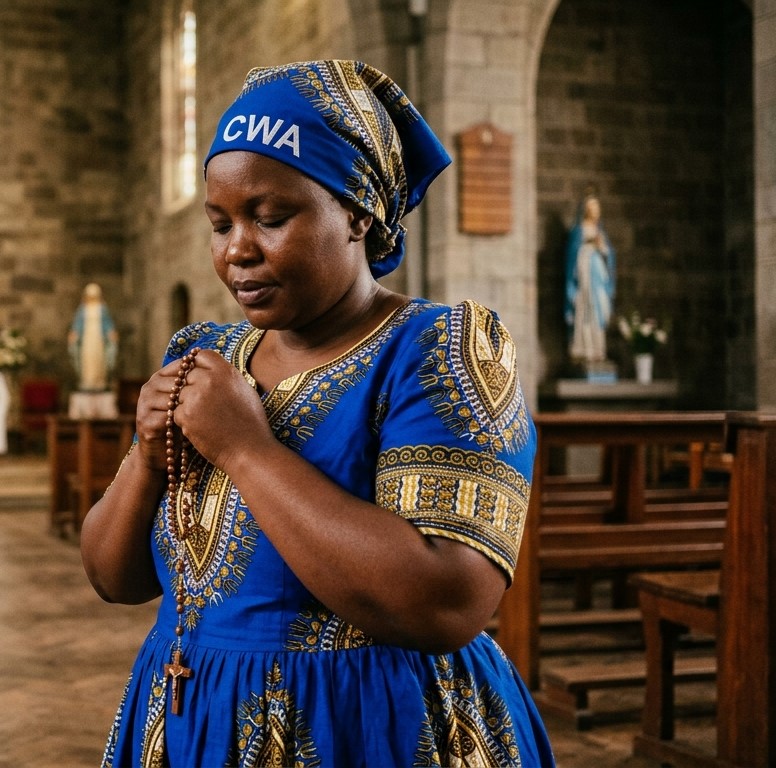
At first glance, a Rosary may look like a simple string of beads with a crucifix hanging at the end. But for millions of Catholics around the world, it is much more than that. It is a companion in moments of joy, a quiet comfort in times of sorrow, and a gentle way of walking through the life of Jesus—one prayer, one bead, one mystery at a time.
The Rosary developed gradually over centuries. Early Christians used repeated prayers and counted them in different ways, while monks prayed the Psalms. Over time, the practice of repeating the Our Father and Hail Mary developed into the form of prayer we now recognize as the Rosary. It became especially popular in the Middle Ages, with the Dominicans playing an important role in spreading the devotion. The familiar Rosary structure was later shaped and formally encouraged by the Church. In 2002, Pope St. John Paul II added the Luminous Mysteries, giving us the four sets of mysteries commonly prayed today: Joyful, Luminous, Sorrowful, and Glorious.
The most common Rosary is the traditional five-decade Rosary, with each decade containing ten Hail Mary beads. But there are other beautiful forms too. There is the one-decade or pocket Rosary, the Seven Sorrows Chaplet, with seven groups of seven beads, the Franciscan Rosary, which traditionally reflects on the Seven Joys of Mary, and the Brigittine Rosary, with its distinctive six decades. Different designs, yes—but all of them invite the heart into prayer and reflection.
So why do Catholics value the Rosary so deeply?
Perhaps because life can become noisy. Our minds run in ten different directions, our worries have meetings without inviting us, and sometimes we want to pray but do not even know where to begin. The Rosary gives the heart something gentle to hold onto. As the fingers move from bead to bead, the mind is invited to rest on the mysteries of Christ: His birth, His ministry, His suffering, His death, His resurrection, and His glory.
And here is one of the most important clarifications: Catholics do not worship Mary.
Worship belongs to God alone.
When Catholics pray the Rosary, they honour Mary as the mother of Jesus and ask for her prayers and intercession—much like asking a loved one, “Please pray for me.” The Rosary itself is deeply centred on Jesus. Even while praying the Hail Mary, the heart is continually drawn back to Christ and the mysteries of His life. As St. John Paul II beautifully explained, the Rosary is Marian in character, but at its heart, it is a Christ-centred prayer.
History is also filled with moments when Catholics gathered to pray the Rosary during times of fear and uncertainty. One famous example is the Battle of Lepanto in 1571, when Pope Pius V called Christians to pray the Rosary during a time of great danger. Following the victory of the Holy League, the Church connected the event with prayers for Mary's intercession, and October 7 eventually became associated with the Feast of Our Lady of the Rosary. Whether in great public moments of history or in the quiet battles of an ordinary home, Catholics have continued to turn to the Rosary seeking peace, courage, comfort and grace.
But perhaps the greatest strength of the Rosary is not found only in dramatic stories of history. Perhaps it is found in a mother quietly praying beside her sleeping child. In the hands of an elderly person whispering prayers through the night. In the fingers of someone sitting in a hospital, holding onto faith when there are no easy answers.
The Rosary reminds us that faith does not always have to be loud.
Sometimes, faith simply says, “Hail Mary…”
One bead.
One prayer.
One moment closer to Jesus.
And perhaps that is the quiet beauty of the Rosary: in a world that is always rushing somewhere, it invites us to slow down, breathe, remember the Gospel, and walk—gently—with Christ, accompanied by the woman who said the most beautiful yes in history.
A string of beads.
A heart in prayer.
And a journey that always leads us back to Jesus.